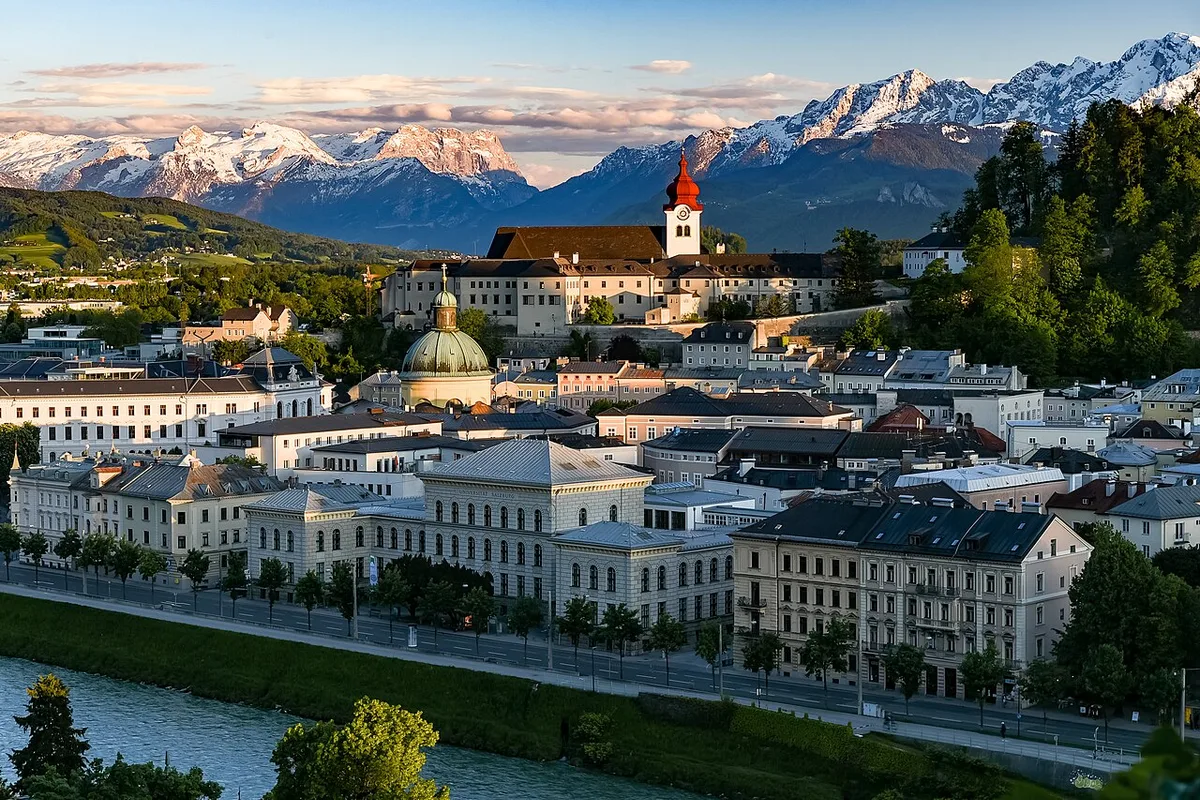
Salzburg
City guide · Salzburg (state), Austria · Austria
Historic Centre of the City of Salzburg · Hohensalzburg Fortress
About Salzburg
Salzburg is a compact Austrian city on the Salzach River at the foot of the Alps, near the German border. It is the fourth-largest city in Austria and the capital of the state of Salzburg. The city is renowned for its well-preserved Baroque old town (Altstadt), which was inscribed as a UNESCO World Heritage Site in 1996. Salzburg is the birthplace of Wolfgang Amadeus Mozart and is home to Hohensalzburg Fortress, one of the largest medieval fortresses in Europe, dating from the 11th century. The historic centre is considered one of the best-preserved city centres north of the Alps. Along with Vienna and the Tyrol, Salzburg is one of Austria's most popular tourist destinations.
Who this destination fits
Highlights worth planning around
Strong fit
- Historic centre is a UNESCO World Heritage Site (inscribed 1996) and renowned for its Baroque architecture, considered one of the best-preserved city centres north of the Alps.
- Rich cultural and musical heritage as the birthplace of Wolfgang Amadeus Mozart, with an extensive cultural history.
- Home to Hohensalzburg Fortress, one of the largest medieval fortresses in Europe, dating from the 11th century.
- Compact city layout on the Salzach River makes it easy to explore on foot.
- One of Austria's most popular tourist destinations, alongside Vienna and the Tyrol.
Tradeoffs
- As one of Austria's most popular tourist destinations, it can draw significant crowds, particularly in peak seasons.
- Being a compact historic city, accommodation and dining in the central Altstadt area may be at a premium.
- The city's popularity means it may feel less off-the-beaten-path than smaller Austrian towns.
Plan the trip
Best time to visit
Salzburg is a year-round destination, but the summer months (June to August) offer the warmest weather and a full calendar of outdoor festivals, while the winter season brings Christmas markets and a festive atmosphere. Spring and autumn provide milder temperatures and fewer crowds.
Planning lead time
A weekend (2-3 days) is sufficient to explore the compact historic centre and major sights, though travelers wishing to visit surrounding lakes and alpine areas may want to allow 4-5 days.
Decision factors
Safety
Salzburg is generally considered a safe city for travelers. As with any popular tourist destination, visitors should remain aware of their belongings in crowded areas and follow standard urban safety precautions.
Getting around
Salzburg is highly walkable, especially the historic centre. The city also has an efficient public transport network including buses and trolleybuses. The main train station (Hauptbahnhof) provides regional and international rail connections, and Salzburg Airport (W.A. Mozart) is about 20 minutes from the centre. Biking is popular with over 100 km of bike paths.
Trip Budget Calculator for Salzburg
Estimate your travel expenses based on duration, style & group size
Global planning baseline. Flights use a generic estimate.
* Commission may be earned from qualifying partner bookings.