Santiago
City guide · Santiago Metropolitan Region · Chile
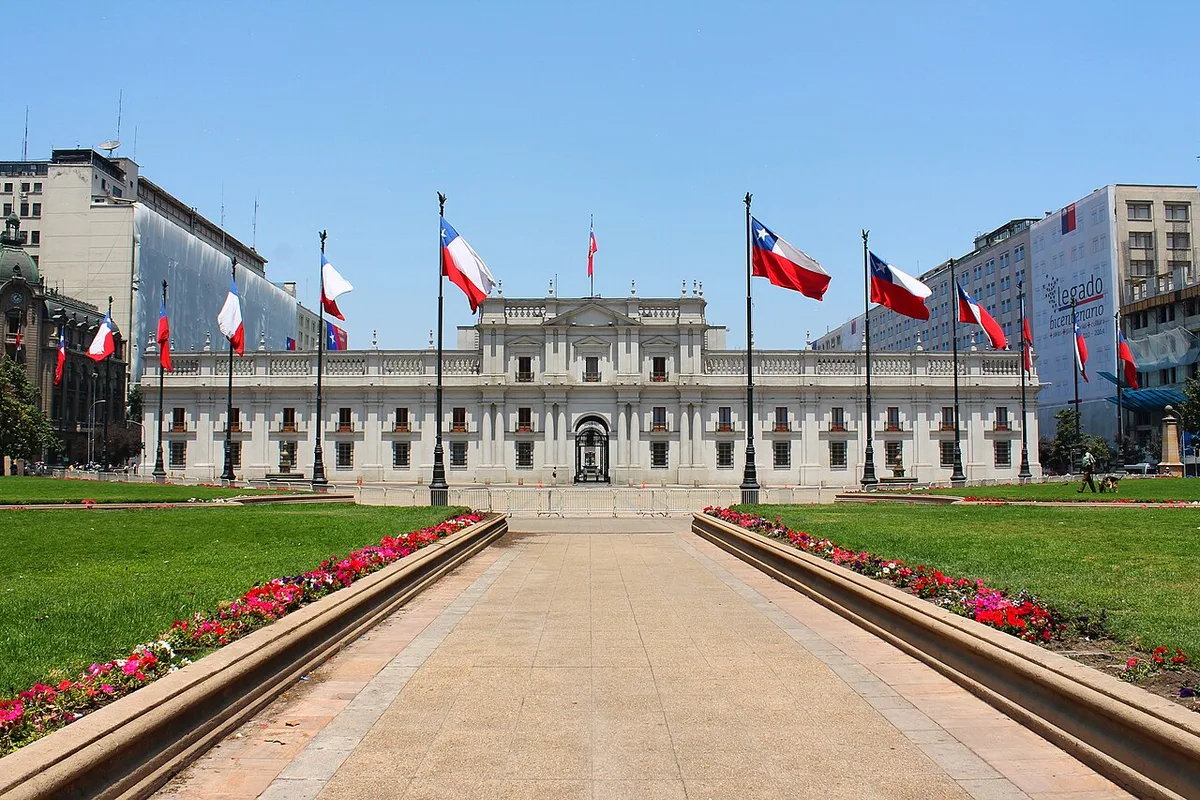
La Moneda Palace · San Cristóbal Hill
About Santiago
Santiago is the capital and largest city of Chile, located in the Chilean Central Valley within the Santiago Basin, between the Andes to the east and the Chilean Coastal Range to the west. Founded on 12 February 1541 by Pedro de Valdivia as Santiago del Nuevo Extremo, the city anchors the Santiago Metropolitan Region and its conurbation of Greater Santiago, which comprises more than forty communes and concentrates over a third of the national population and around 45% of Chile's GDP. The city is the political and administrative heart of Chile, housing the presidential palace and main organs of the executive and judiciary, while the National Congress meets primarily in nearby Valparaíso. Economically, Santiago is the country's principal industrial, commercial, and financial hub and a regional center for services, hosting headquarters of major Chilean companies, regional offices of international organizations such as ECLAC, and several of the nation's leading universities and research institutes. The urban landscape combines a 19th-century neoclassical core and surviving colonial churches with extensive modern residential districts, standalone hills such as Cerro Santa Lucía and Cerro San Cristóbal, and parklands along the Mapocho River, including Parque Forestal, Parque Bicentenario, and Santiago Metropolitan Park. The city has a cool semi-arid climate with Mediterranean characteristics, warm, dry summers and cool, wetter winters; its location in an enclosed valley contributes both to scenic views of the high Andes and to chronic air pollution and winter smog. Santiago is served by Arturo Merino Benítez International Airport, a dense network of urban highways, and one of Latin America's most extensive metro systems.
Who this destination fits
Highlights worth planning around
Strong fit
- Capital and largest city of Chile, serving as the principal industrial, commercial, and financial hub
- Houses the presidential palace and main organs of the executive and judiciary, making it the political heart of the country
- Features a mix of 19th-century neoclassical core, surviving colonial churches, and modern residential districts
- Offers scenic views of the high Andes from its location in an enclosed valley
- Served by Arturo Merino Benítez International Airport and one of Latin America's most extensive metro systems
- Home to standalone hills like Cerro Santa Lucía and Cerro San Cristóbal, plus parklands along the Mapocho River
Tradeoffs
- Location in an enclosed valley contributes to chronic air pollution and winter smog
- Cool semi-arid climate with Mediterranean characteristics means cool, wetter winters that may not suit all travelers
- National Congress meets primarily in nearby Valparaíso, not in Santiago itself
Plan the trip
Best time to visit
Warm, dry summers and cool, wetter winters characterize the cool semi-arid climate with Mediterranean characteristics
Planning lead time
Moderate planning recommended for a city with diverse districts, hills, and cultural institutions
Decision factors
Getting around
Served by Arturo Merino Benítez International Airport, a dense network of urban highways, and one of Latin America's most extensive metro systems
Trip Budget Calculator for Santiago
Estimate your travel expenses based on duration, style & group size
Global planning baseline. Flights use a generic estimate.
* Commission may be earned from qualifying partner bookings.