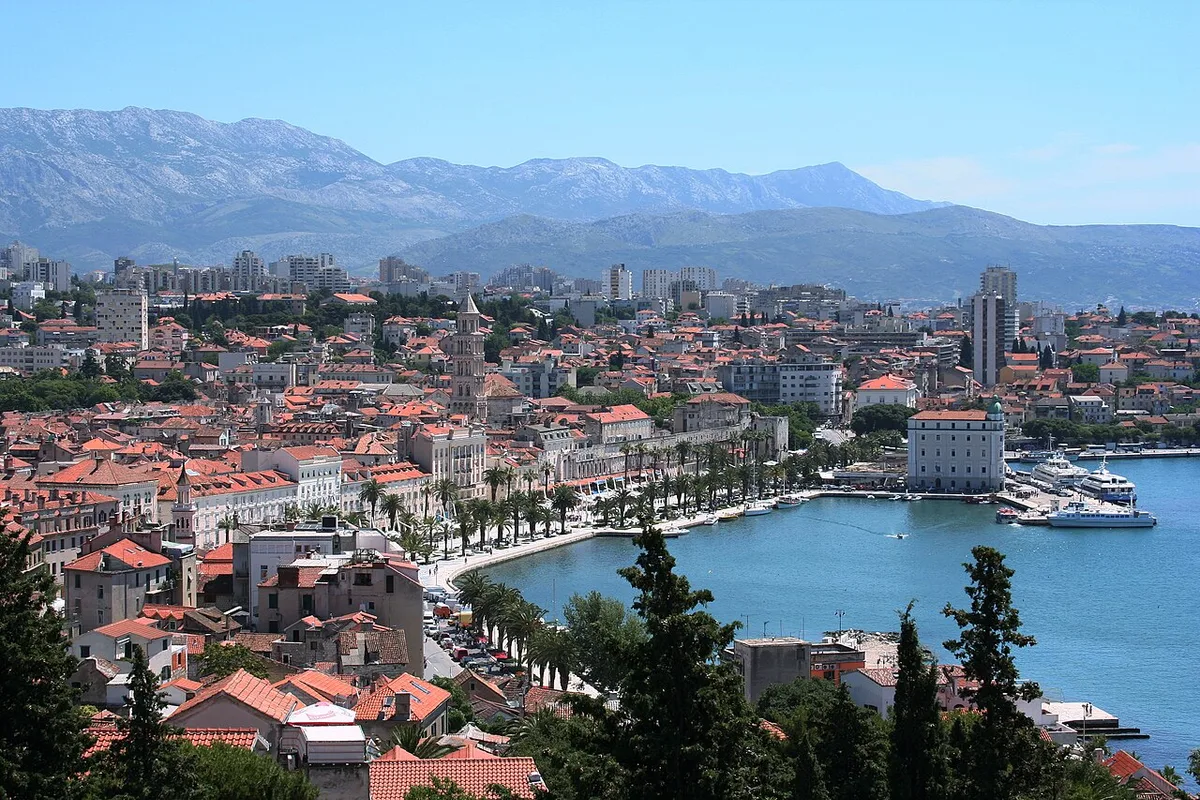
Split, Croatia
City guide · Dalmatia · Croatia
Diocletian's Palace, built in 305 CE, forms the historic core of the city and is a UNESCO World Heritage Site · The city's historic complex, inscribed as a UNESCO World Heritage Site in 1979, reflects continuous urban life from late antiquity to the present
About Split, Croatia
Split is Croatia's second-largest city and the largest urban center on the Croatian coast, situated on the eastern shore of the Adriatic Sea. Developed around the historic core of Diocletian's Palace, a UNESCO World Heritage Site since 1979, the city combines a continuous urban tradition spanning more than seventeen centuries with a contemporary role as one of Croatia's leading tourist destinations. As the administrative seat of Split-Dalmatia County, it serves as a key economic, cultural, and transportation hub for the region, with the Port of Split being one of the busiest passenger ports in the Mediterranean and a gateway to the southern Adriatic islands.
Who this destination fits
Highlights worth planning around
Strong fit
- Historic core of Diocletian's Palace is a UNESCO World Heritage Site, inscribed in 1979, reflecting continuous urban life from late antiquity to the present
- Serves as a major transportation hub with one of the busiest passenger ports in the Mediterranean, providing access to the southern Adriatic islands
- Combines a 17-century urban tradition with modern tourist infrastructure, appealing to both culture seekers and leisure travelers
Tradeoffs
- Popularity as a tourist destination means the historic core can be crowded during peak travel periods
- As a major coastal hub, the city can feel busy and transit-oriented rather than a quiet retreat
Decision factors
Getting around
Split is a major transportation hub, with the Port of Split being one of the busiest passenger ports in the Mediterranean, serving as a key gateway to the southern Adriatic islands (CURRENT_STATE; source: https://en.wikipedia.org/wiki/Split,_Croatia; role: EDITORIAL_CONTEXT).
Trip Budget Calculator for Split, Croatia
Estimate your travel expenses based on duration, style & group size
Global planning baseline. Flights use a generic estimate.
* Commission may be earned from qualifying partner bookings.