Berlin
Region guide · Berlin · Germany
Brandenburg Gate · Reichstag building
About Berlin
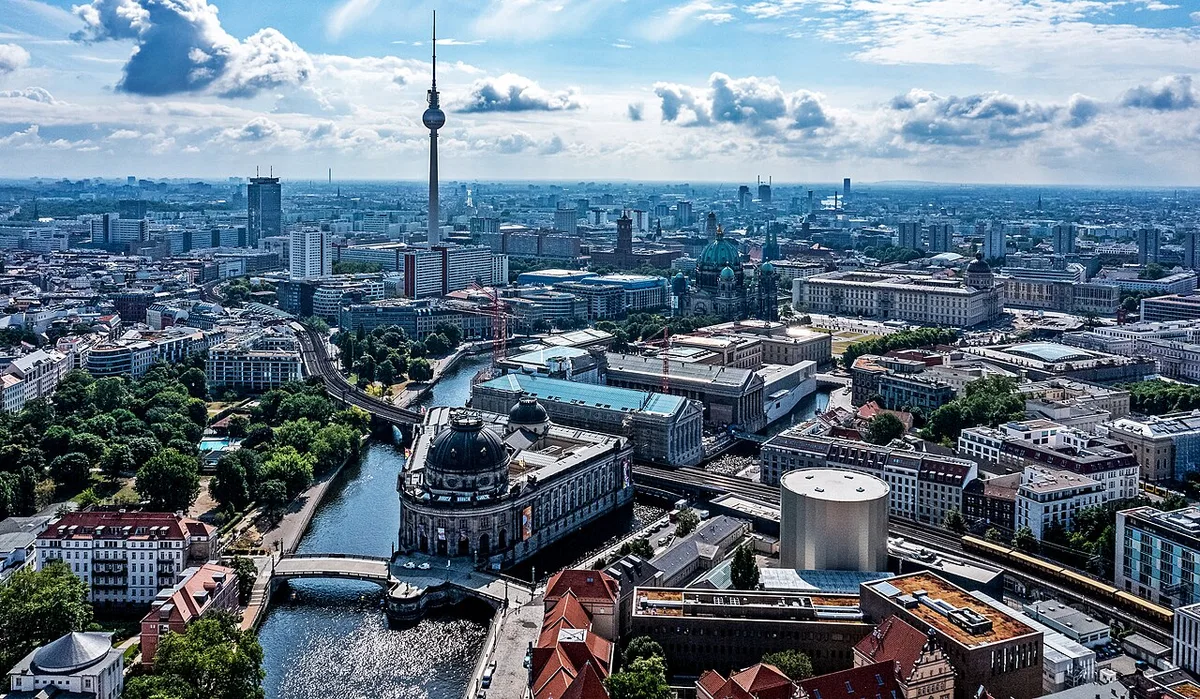
Berlin is the capital and largest city of Germany, with a population of about 3.7 million within city limits, making it the most populous city in the European Union. Built along the banks of the Spree river, the city is one of Germany's 16 states and is surrounded by the state of Brandenburg. About one-third of Berlin's area is composed of forests, parks, gardens, rivers, canals, and lakes. Historically, Berlin served as the capital of the Margraviate of Brandenburg, Kingdom of Prussia, German Empire, Weimar Republic, and Nazi Germany. After World War II, the city was split into West Berlin and East Berlin, divided by the Berlin Wall, until German reunification in 1990 when Berlin once again became the capital of all of Germany. Today, Berlin is a global city of culture, politics, media, and science, with an economy based on high tech and the service sector, including creative industries, startups, research facilities, and media corporations. The city is home to three World Heritage Sites: Museum Island, the Palaces and Parks of Potsdam and Berlin, and the Berlin Modernism Housing Estates. Landmarks include the Brandenburg Gate, the Reichstag building, and Potsdamer Platz.
Who this destination fits
Highlights worth planning around
Strong fit
- Rich significance with landmarks like the Brandenburg Gate, Reichstag, and remnants of the Berlin Wall
- Home to three UNESCO World Heritage Sites: Museum Island, Palaces and Parks of Potsdam and Berlin, and Berlin Modernism Housing Estates
- Extensive public transportation network and serves as a continental hub for air and rail traffic
- Diverse economy with strengths in information technology, healthcare, biomedical engineering, biotechnology, automotive, and electronics
- About one-third of the city's area is green space, including forests, parks, gardens, rivers, canals, and lakes
Tradeoffs
- Large, spread-out city that may require significant time to explore different districts
- Cold winters with temperatures often near freezing from December through February
- Some areas can feel crowded with tourists, particularly around major landmarks like Brandenburg Gate and Museum Island
Plan the trip
Best time to visit
May through September offers milder weather and longer daylight hours, though summer can be busy. Spring and early autumn provide pleasant conditions with fewer crowds.
Planning lead time
3-5 days recommended for first-time visitors to cover major landmarks, museums, and diverse neighborhoods
Decision factors
Safety
Berlin is generally considered a safe city for travelers, though standard urban precautions apply, especially in crowded tourist areas and on public transport at night.
Getting around
Berlin has a complex public transportation network including U-Bahn (underground), S-Bahn (suburban rail), trams, buses, and ferries. The city also serves as a continental hub for air and rail traffic.
Trip Budget Calculator for Berlin
Estimate your travel expenses based on duration, style & group size
Global planning baseline. Flights use a generic estimate.
* Commission may be earned from qualifying partner bookings.


![4X Travel Adapter Plugs for EUROPE FRANCE SPAIN GREECE Purple [2-Ports + SURGE]](https://i.ebayimg.com/images/g/zO4AAOSwpbxg64no/s-l225.jpg)


