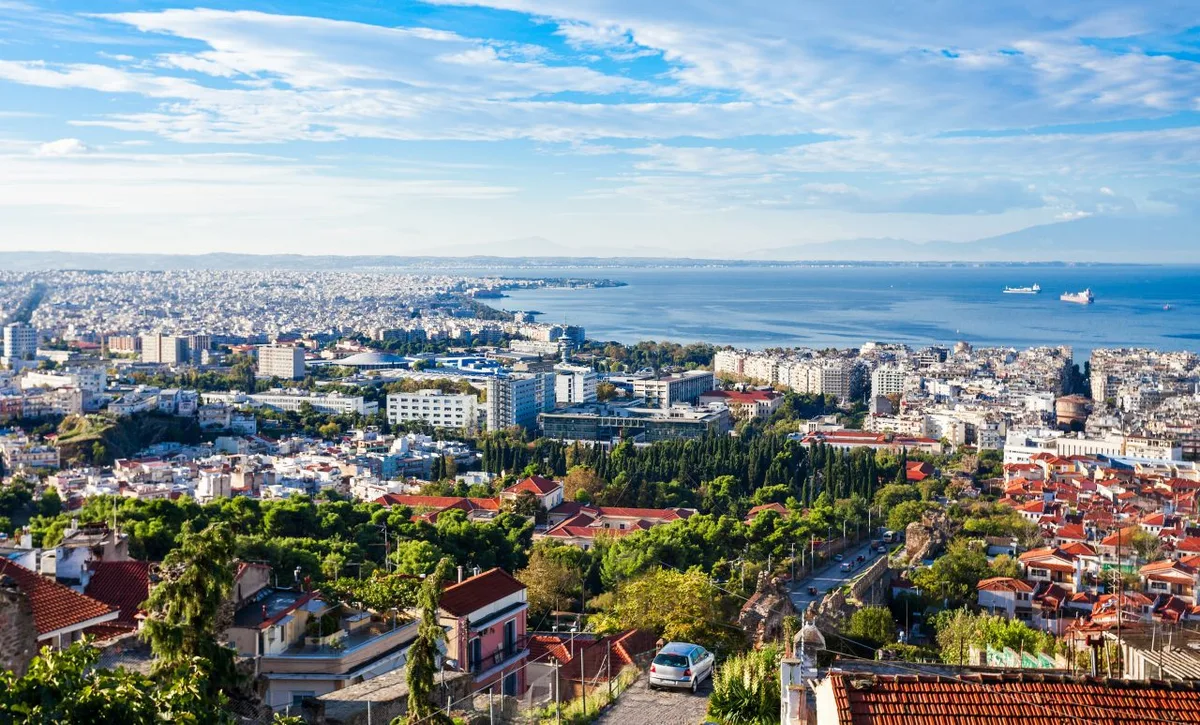
Thessaloniki
City guide · Central Macedonia, Northern Greece · Greece
White Tower: 16th-century Ottoman fortress, symbol of the city, standing about 34 meters tall with six floors and panoramic views · Rotunda: UNESCO World Heritage Site, Roman-era monument built around 306 CE under Galerius, later used as a church and mosque
About Thessaloniki
Thessaloniki is Greece's second-largest city, located on the shores of the Thermaic Gulf in the northern region of Central Macedonia. Founded around 315 BC by King Cassander, it has over 2,300 years of layered history spanning Roman, Byzantine, and Ottoman periods, visible in its streets, churches, markets, and ruins. The city is known for its vibrant food scene, often considered Greece's food capital, with local specialties like bougatsa and meze-style dining. It offers a lived-in, authentic atmosphere with a strong student population, lively nightlife, and a compact, walkable historic core. Thessaloniki is an excellent base for exploring Northern Greece, with day-trip options to Meteora, Mount Olympus, Pella, and Vergina. It is best suited for travelers who enjoy history, culture, food, and urban exploration over beach-focused or romantic island scenery.
Who this destination fits
Highlights worth planning around
Strong fit
- Deep, layered history (Roman, Byzantine, Ottoman) woven into everyday streets, churches, markets, and ruins, explorable on foot
- One of Greece's strongest food cities, widely considered Greece's food capital, known for bougatsa, meze-style dining, and vibrant markets
- Lively but lived-in nightlife with a large student population, offering authentic, non-seasonal atmosphere
- Good value compared to island destinations, with generally lower costs for accommodation, food, and nightlife, especially outside peak summer
- Excellent base for Northern Greece with day trips to Meteora, Mount Olympus, Pella, and Vergina
Tradeoffs
- Not a beach-focused destination; better beaches require a drive to Halkidiki, making it a city-first trip
- More urban than romantic, lacking the polished, postcard scenery of islands like Santorini
- Best enjoyed by walkers; the historic core is compact but hilly in parts (especially Ano Poli), which may be tiring for some
Plan the trip
Best time to visit
Spring and early summer, and fall before it gets too cold, when weather is pleasant and the city is animated by festivities and festivals
Planning lead time
A few days to explore the city and nearby day trips
Decision factors
Getting around
Accessible via Thessaloniki Airport (SKG) with direct flights from many European hubs. Connected to Athens by train (typically ~5 hours, timetables can change) and by car (roughly 4.5–5.5 hours via A1/E75). Local transport includes a walkable center plus metro and buses.
Trip Budget Calculator for Thessaloniki
Estimate your travel expenses based on duration, style & group size
Global planning baseline. Flights use a generic estimate.
* Commission may be earned from qualifying partner bookings.