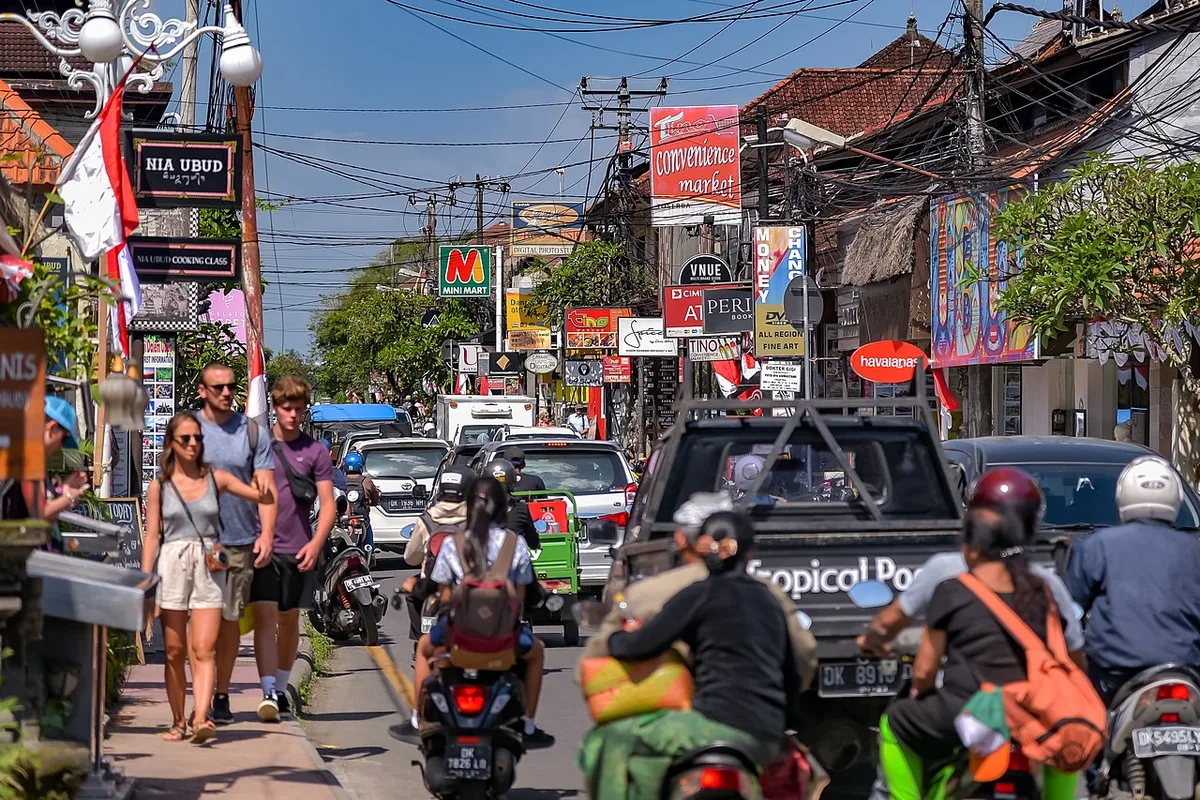
Ubud
City guide · Bali · Indonesia
Ubud Monkey Forest - protected area with active temple and crab-eating macaques · Campuhan Ridge Walk - popular sunset spot with views of two merging rivers
About Ubud
Ubud is a town in the Gianyar Regency of Bali, Indonesia, promoted as an arts and culture centre with a large tourism industry. It forms the northern part of the Greater Denpasar metropolitan area (Sarbagita). The town is surrounded by farms, rice paddies, agroforestry plantations, and tourist accommodations. Ubud is known for its art museums, traditional dance performances, temples, and the Ubud Monkey Forest. The main street is Jalan Raya Ubud, running east-west through the center of town, with Jalan Monkey Forest and Jalan Hanoman extending south. The economy is highly reliant on tourism, with a focus on shopping, resorts, museums, yoga, and zoos.
Who this destination fits
Highlights worth planning around
Strong fit
- Rich arts and culture scene with several art museums including the Blanco Renaissance Museum, Puri Lukisan Museum, Neka Art Museum, and Agung Rai Museum of Art
- Numerous traditional Balinese dance performances held around Ubud, including Legong by the Peliatan Dance Group
- Natural attractions like the Campuhan Ridge Walk, a popular sunset spot with views of two merging rivers
- Ubud Monkey Forest, a protected area housing an active temple and approximately 750 crab-eating macaques (as of June 2017)
- Strong focus on sustainable retail with many Bali-grown brands favoring environmentally friendly materials
- Annual events like the Ubud Writers and Readers Festival and Ubud Food Festival attract international visitors
Tradeoffs
- Metered taxi and ride-sharing pickup is not permitted within Ubud; taxis must be negotiated with the local cooperative, with fares potentially inflated up to 10 times those elsewhere
- Tourists far outnumber locals, with the Gianyar regency seeing 3,842,663 tourist arrivals in 2017
- Tourism-dependent economy means crowds can be significant, particularly at popular sites like the Monkey Forest
- Tropical rainforest climate with heavy rainfall from November through January (over 290mm per month)
- As of 2018, more tourists visited Ubud than Denpasar to the south, indicating high visitor density
Plan the trip
Best time to visit
The dry season months of April through September generally see lower precipitation, with August being the driest month (90mm average). The wettest months are January, February, and December, each averaging over 290mm of rain.
Planning lead time
A few days to a week is typically sufficient to explore Ubud's cultural sites, museums, and surrounding natural attractions.
Decision factors
Safety
Ubud is generally considered safe for tourists, though standard precautions apply. The main transport consideration is that metered taxis and ride-sharing pickups are not permitted within Ubud; visitors must negotiate fares with the local taxi cooperative, which can be significantly more expensive than elsewhere in Bali.
Getting around
The main street is Jalan Raya Ubud, running east-west through the center. Two long roads, Jalan Monkey Forest and Jalan Hanoman, extend south from Jalan Raya Ubud. Metered taxi and ride-sharing pickup is not permitted within Ubud; instead, taxis must be negotiated with the local taxi cooperative, with fares potentially inflated up to 10 times those available elsewhere.
Trip Budget Calculator for Ubud
Estimate your travel expenses based on duration, style & group size
Global planning baseline. Flights use a generic estimate.
* Commission may be earned from qualifying partner bookings.