Oaxaca de Juárez
City guide · Central Valleys, Oaxaca · Mexico
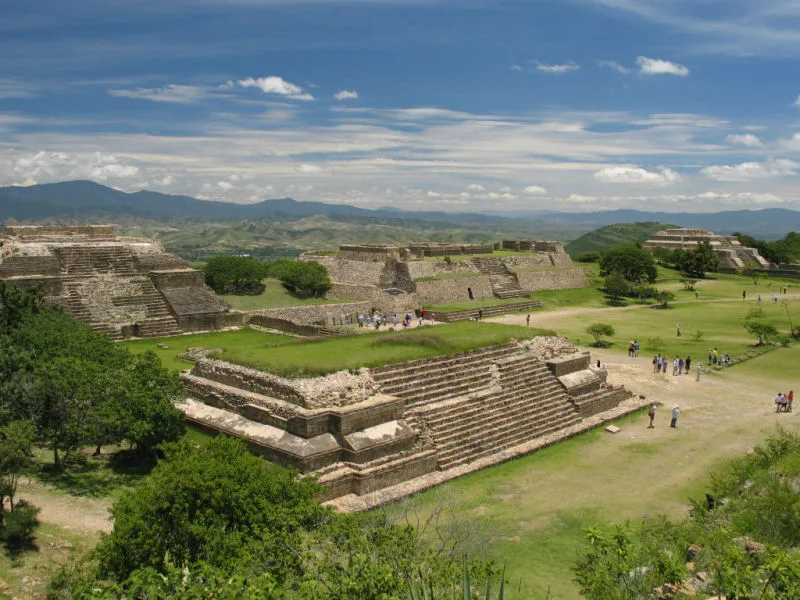
Historic Centre of Oaxaca and Archaeological Site of Monte Albán · Monte Albán, regarded as the antecedent of the modern city
About Oaxaca de Juárez
Oaxaca de Juárez is the capital and largest city of the Mexican state of Oaxaca, located in the Central Valleys region in the foothills of the Sierra Madre at the base of the Cerro del Fortín, extending to the banks of the Atoyac River. The city is renowned for its heritage tourism, featuring numerous colonial-era structures, significant archaeological sites, and elements of the continuing native Zapotec and Mixtec cultures. Together with the nearby archaeological site of Monte Albán, the city was designated a UNESCO World Heritage Site in 1987. Oaxaca is also known as 'la Verde Antequera' (the green Antequera) due to its prior Spanish name and the variety of structures built from native green stone. The name 'Oaxaca' derives from the Nahuatl name 'Huaxyacac', and 'de Juárez' was added in 1872 in honor of Benito Juárez, a native of the state who became president of Mexico.
Who this destination fits
Highlights worth planning around
Strong fit
- Designated UNESCO World Heritage Site in 1987, together with Monte Albán, recognizing the historic centre and archaeological significance
- Rich cultural heritage with continuing native Zapotec and Mixtec cultural elements
- Numerous colonial-era structures and significant archaeological sites
- Home to the month-long Guelaguetza cultural festival featuring Oaxacan dance from the seven regions, music, and a beauty pageant for indigenous women
Tradeoffs
- Heritage tourism is a major economic driver, which may lead to crowding during peak festival periods
- Located in the foothills of the Sierra Madre, which may involve challenging terrain for some visitors
Plan the trip
Planning lead time
Not specified in available evidence
Decision factors
Safety
Not specified in available evidence
Getting around
Not specified in available evidence
Trip Budget Calculator for Oaxaca de Juárez
Estimate your travel expenses based on duration, style & group size
Global planning baseline. Flights use a generic estimate.
* Commission may be earned from qualifying partner bookings.


