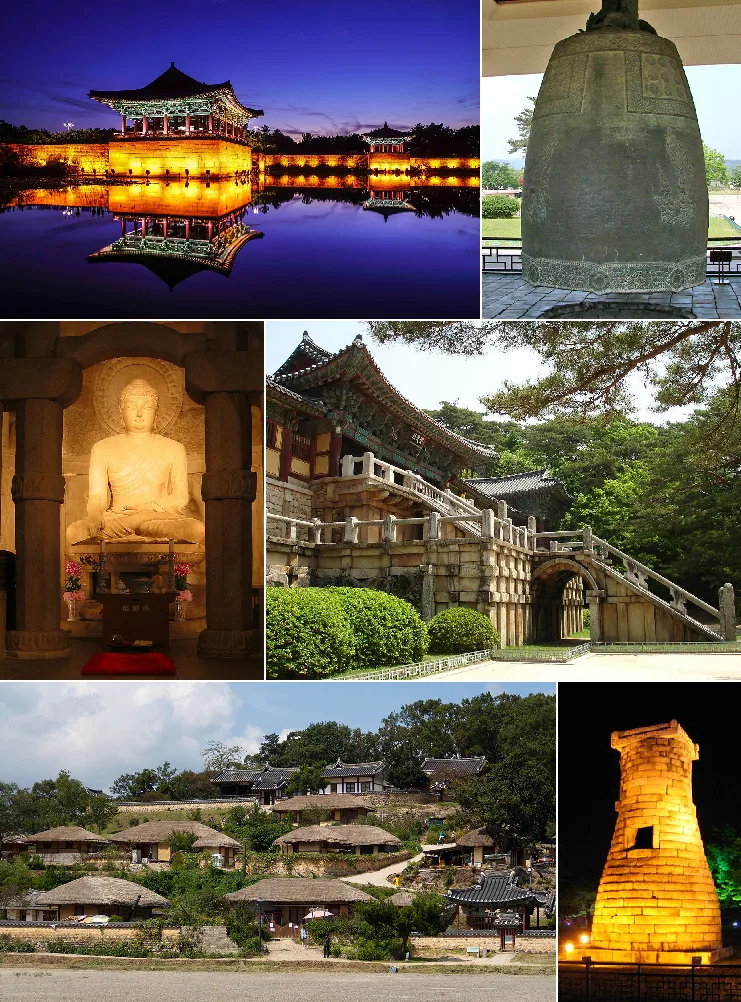
Gyeongju
City guide · North Gyeongsang Province · South Korea
Seokguram grotto · Bulguksa temple
About Gyeongju
Gyeongju, historically known as Seorabeol, is a coastal city in the far southeastern corner of North Gyeongsang Province, South Korea. It was the capital of the ancient kingdom of Silla (57 BC – 935 AD), which ruled about two-thirds of the Korean peninsula at its height between the 7th and 9th centuries. The city is often referred to as 'the museum without walls' due to the vast number of archaeological sites and cultural properties from this period that remain. Among its treasures, Seokguram grotto, Bulguksa temple, Gyeongju Historic Areas, and Yangdong Folk Village are designated as World Heritage Sites by UNESCO. Today, tourism remains the major economic driver, though manufacturing has developed due to proximity to industrial centers like Ulsan and Pohang.
Who this destination fits
Highlights worth planning around
Strong fit
- Rich heritage as the former capital of the Silla kingdom, with numerous archaeological sites and cultural properties
- Multiple UNESCO World Heritage Sites including Seokguram grotto, Bulguksa temple, Gyeongju Historic Areas, and Yangdong Folk Village
- Often called 'the museum without walls' for its open-air treasures
- Connected to nationwide rail and highway networks, facilitating travel
- Tourism remains a major economic driver, indicating established visitor infrastructure
Tradeoffs
- No longer a major city; relatively small with a population under 300,000, so fewer urban amenities than larger Korean cities
- significance means many sites are spread out, requiring planning to visit efficiently
- Manufacturing and industrial development may detract from the atmosphere in some areas
- As a secondary destination, may require more effort to reach than Seoul or Busan
Plan the trip
Best time to visit
Not specified in available evidence
Planning lead time
Not specified in available evidence
Decision factors
Safety
Not specified in available evidence
Getting around
Gyeongju is connected to the nationwide rail and highway networks, which facilitate industrial and tourist traffic.
Trip Budget Calculator for Gyeongju
Estimate your travel expenses based on duration, style & group size
Global planning baseline. Flights use a generic estimate.
* Commission may be earned from qualifying partner bookings.