Gothenburg
City guide · Västra Götaland County · Sweden
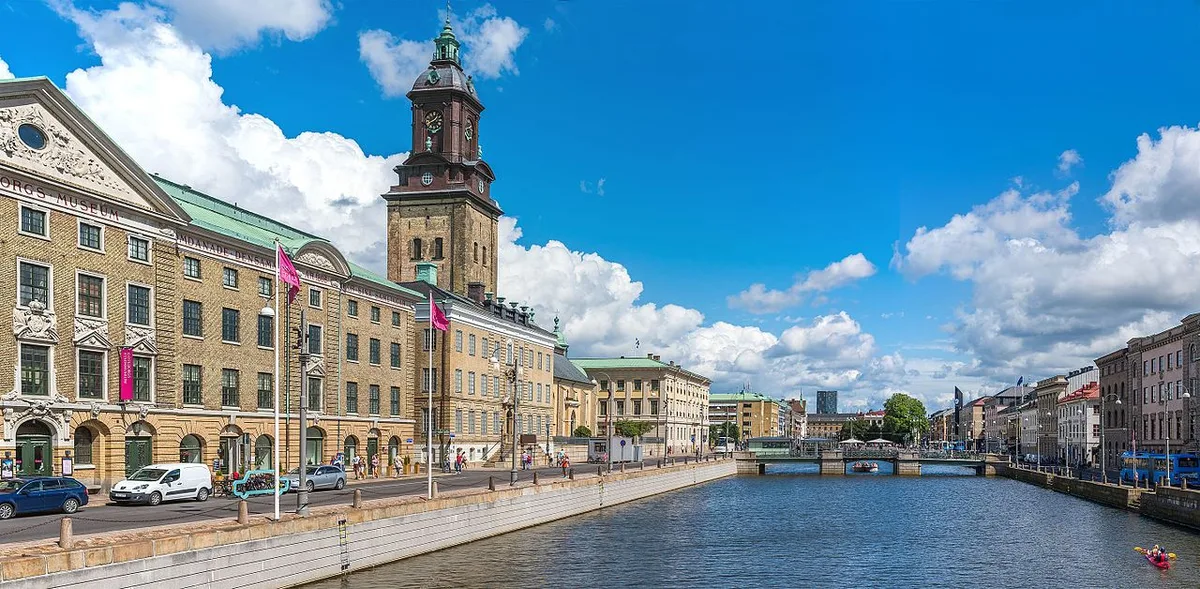
The Port of Gothenburg, the largest port in the Nordic countries · The Göta älv river, where Scandinavia's largest drainage basin enters the sea
About Gothenburg
Gothenburg (Swedish: Göteborg) is Sweden's second-largest city and the fifth-largest in the Nordic countries, situated on the west coast by the Kattegat, about 400 km from Stockholm. Founded by royal charter in 1621 by King Gustavus Adolphus as a heavily fortified, primarily Dutch trading colony, it sits at the mouth of the Göta älv, where Scandinavia's largest drainage basin enters the sea. The city is the gubernatorial seat of Västra Götaland County and home to the University of Gothenburg and Chalmers University of Technology, giving it a strong student presence. Volvo was founded here in 1927, and both Volvo Cars and the Volvo Group remain headquartered on the island of Hisingen. Gothenburg is known for its maritime heritage, canals, and as a gateway to the Swedish west coast archipelago, offering a more relaxed, coastal alternative to Stockholm.
Who this destination fits
Highlights worth planning around
Strong fit
- Second-largest city in Sweden and fifth-largest in the Nordic countries, offering a wide range of urban amenities
- Situated on the west coast by the Kattegat, providing access to the sea and archipelago
- Home to the University of Gothenburg and Chalmers University of Technology, giving the city a youthful, student-driven energy
- Founded in 1621 with a rich maritime and trading history, including the Swedish East India Company
- Hosts the Gothia Cup, the world's largest youth football tournament, and the Gothenburg Film Festival, a leading Scandinavian film festival
- Headquarters of Volvo, with both Volvo Cars and Volvo Group based on the island of Hisingen
Tradeoffs
- Smaller and less internationally prominent than Stockholm, with fewer global attractions
- The smaller Göteborg City Airport was closed to regular airline traffic in 2015, reducing flight options
- Weather can be unpredictable and rainy, typical of a west coast maritime climate
- As a major city, it may not offer the remote wilderness experience some expect from Sweden
- Some key attractions and events are seasonal, with summer being the peak time for festivals and outdoor activities
Plan the trip
Best time to visit
Summer is the peak season for music festivals and outdoor activities, while the Gothenburg Film Festival is held in January.
Planning lead time
A weekend to a few days is sufficient for the city center; more time allows for exploring the archipelago and surrounding coast.
Decision factors
Getting around
Gothenburg is served by Göteborg Landvetter Airport, 25 km southeast of the city centre. The smaller Göteborg City Airport, 15 km from the centre, was closed to regular airline traffic in 2015.
Trip Budget Calculator for Gothenburg
Estimate your travel expenses based on duration, style & group size
Global planning baseline. Flights use a generic estimate.
* Commission may be earned from qualifying partner bookings.