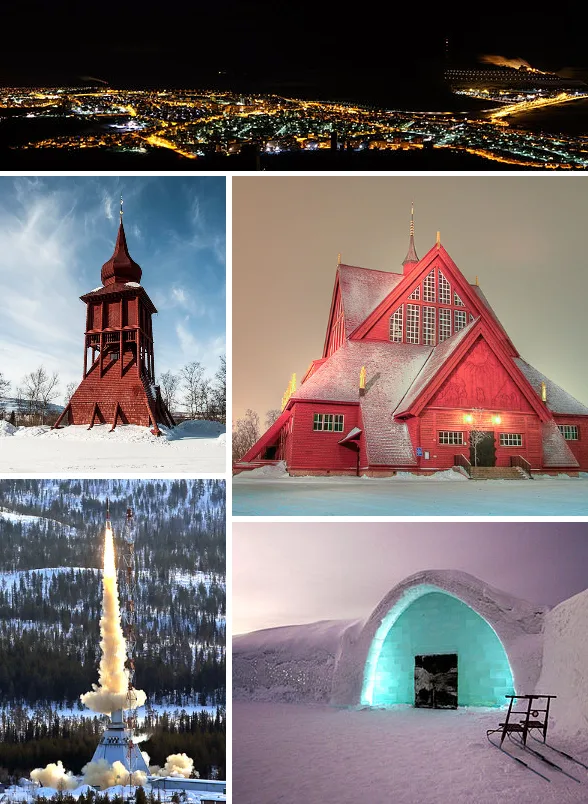
Kiruna
City guide · Lapland · Sweden
Icehotel in Jukkasjärvi · Esrange space center
About Kiruna
Kiruna is Sweden's northernmost city, situated in the province of Lapland within Norrbotten County. Founded in 1900 to serve the Kiruna iron ore mine, it sits at approximately 67°50′56″N 20°18′10″E. The city is known as a base for Arctic experiences, including the Icehotel in nearby Jukkasjärvi and the Esrange space center, established in the 1960s. Kiruna is also home to the Institute of Space Physics and Luleå University of Technology's Department of Space Science. The city's name means 'rock ptarmigan' in Sámi and Finnish, and it is known in Northern Sami as Giron, in Finnish as Kiiruna, and in Meänkieli as Kieruna.
Who this destination fits
Highlights worth planning around
Strong fit
- Northernmost city in Sweden, offering a genuine Arctic atmosphere and access to unique natural phenomena like the midnight sun and polar night
- Home to the Icehotel in Jukkasjärvi, a world-renowned seasonal attraction built from ice and snow
- Rich mining history dating back to the 1890s, with the city originally built to serve the Kiruna mine
- Hosts the Esrange space center, established in the 1960s, along with the Institute of Space Physics and Luleå University of Technology's Department of Space Science
- The city's location on a hill was designed to moderate winter temperatures and limit wind, a deliberate planning choice from its founding
Tradeoffs
- Remote location in the far north of Sweden, requiring significant travel time to reach from major European cities
- Harsh Arctic climate with very cold winters and limited daylight during the polar night period
- The city is undergoing a major relocation due to mining-induced ground deformation, which can affect the urban landscape and infrastructure
- Limited options for warm-weather activities compared to southern Sweden, with a strong seasonal focus on winter tourism
- Small population of about 17,000 in the city itself, meaning fewer urban amenities and services than larger destinations
Plan the trip
Best time to visit
Winter (December to March) for northern lights and snow activities; summer (June to August) for midnight sun and outdoor exploration
Planning lead time
Moderate to extensive planning recommended due to remote location and seasonal availability of activities
Decision factors
Safety
Generally safe destination with standard precautions for cold weather and remote travel
Getting around
Accessible by rail via the Malmbanan line, by air through Kiruna Airport, and by road; the railway arrived in 1899 and was joined to the Norwegian section in 1902
Trip Budget Calculator for Kiruna
Estimate your travel expenses based on duration, style & group size
Global planning baseline. Flights use a generic estimate.
* Commission may be earned from qualifying partner bookings.


