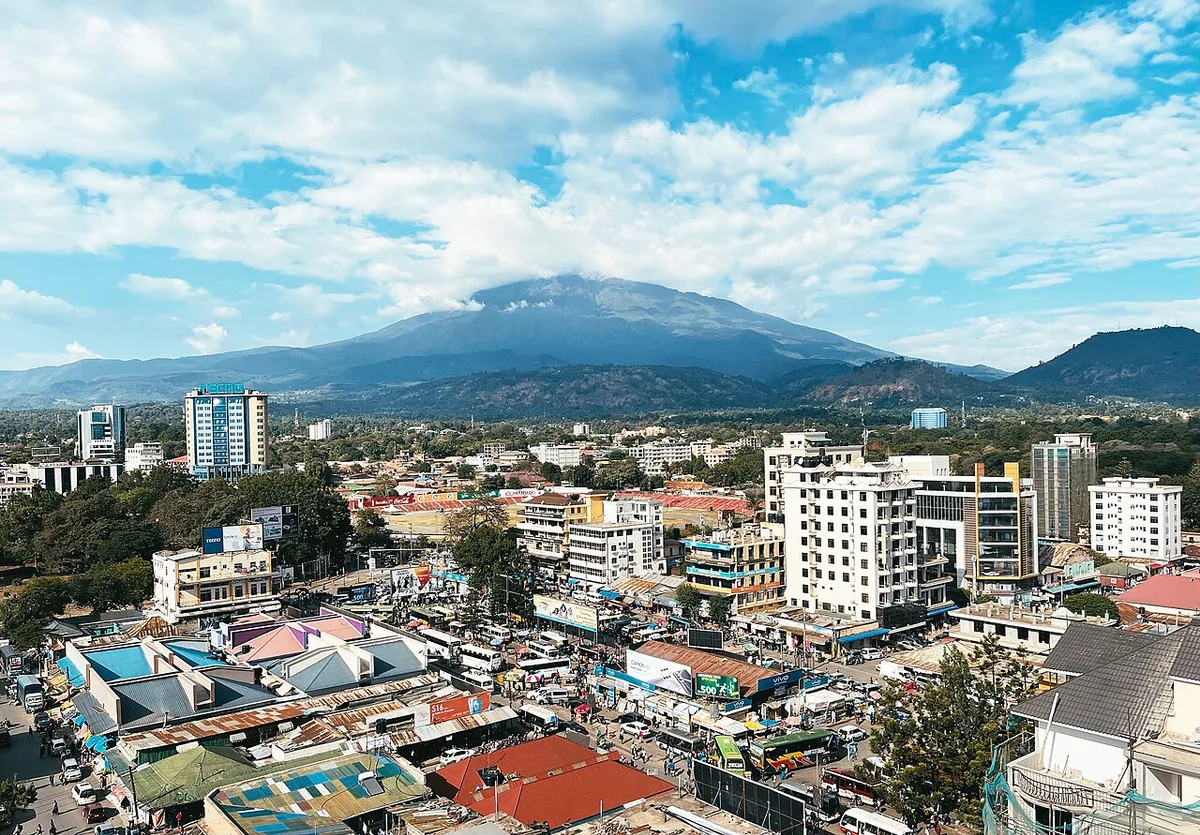
Arusha
City guide · Arusha Region · Tanzania
Mount Meru, located in the background of the city · Arusha National Park, close to the city
About Arusha
Arusha is a city in Tanzania and the capital of the Arusha Region, located below Mount Meru on the eastern edge of the eastern branch of the Great Rift Valley. It is a major international diplomatic hub, hosting the African Court of the African Union and serving as the capital of the East African Community. The city is a classic safari gateway, situated close to Serengeti National Park, Ngorongoro Conservation Area, Lake Manyara National Park, Olduvai Gorge, Tarangire National Park, Mount Kilimanjaro, and Mount Meru in Arusha National Park. Arusha has a temperate climate and a multicultural population of mixed indigenous African, Arab-Tanzanian, and Indian-Tanzanian backgrounds, plus small European and North American minorities. The city was incorporated as a town in 1948 and granted city status in 2012.
Who this destination fits
Highlights worth planning around
Strong fit
- Strategic location as a gateway to major northern Tanzania safari parks including Serengeti, Ngorongoro, Lake Manyara, Tarangire, and Arusha National Park
- Major international diplomatic hub hosting the African Court and serving as capital of the East African Community
- Temperate climate due to its elevation of 1,400 meters below Mount Meru
- Multicultural population with indigenous African, Arab-Tanzanian, Indian-Tanzanian, European, and North American communities
- Rich significance, including the 1967 Arusha Declaration and the 1993 Arusha Accords
Tradeoffs
- cost-of-living increases linked to the presence of international tribunals, which may affect affordability
- Limited current-state information available for transport, safety, and pricing in the grounded evidence
- Not a beach or coastal destination; focus is on safari and cultural experiences
Trip Budget Calculator for Arusha
Estimate your travel expenses based on duration, style & group size
Global planning baseline. Flights use a generic estimate.
* Commission may be earned from qualifying partner bookings.