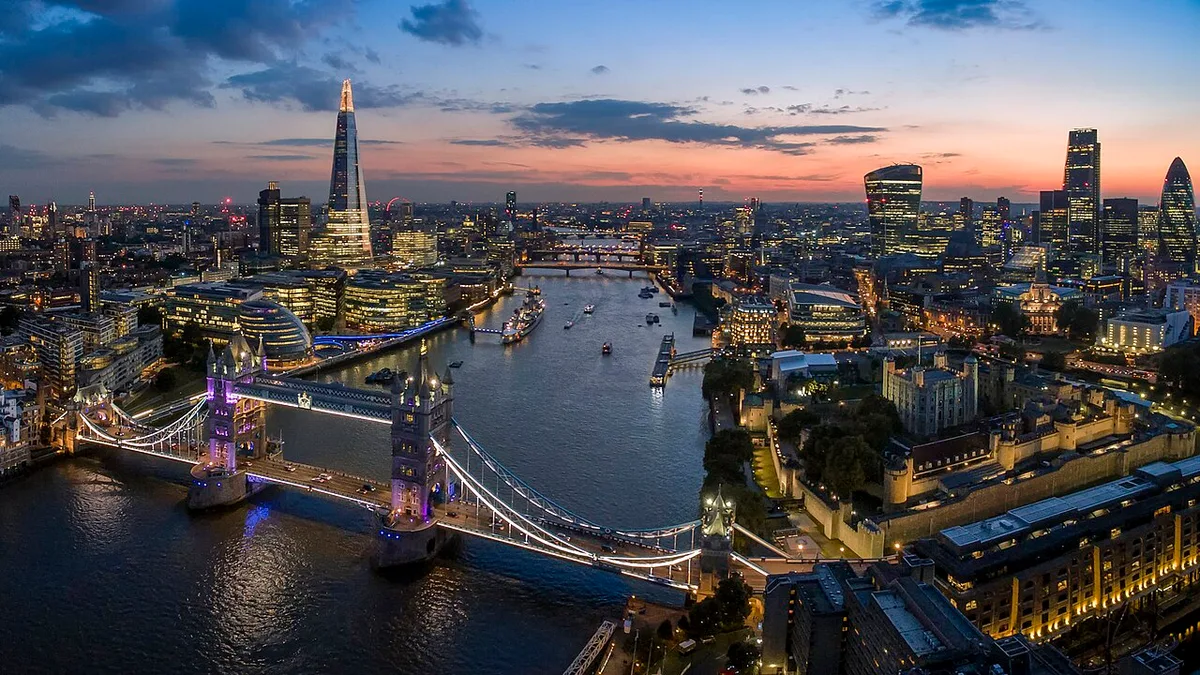
London
City guide · Greater London · United Kingdom
The Tower of London and Tower Bridge · The British Museum and National Gallery
About London
London is the capital and largest city of England and the United Kingdom, with a population of 9.1 million people in 2024. Its wider metropolitan area is the largest in Western Europe, with a population of 15.4 million. London stands on the River Thames in southeast England, at the head of a 50-mile (80 km) tidal estuary down to the North Sea, and has been a major settlement for nearly 2,000 years. Its ancient core and financial centre, the City of London, was founded by the Romans as Londinium and has retained its medieval boundaries. The City of Westminster, to the west of the City of London, has been the site of the national government and parliament for centuries. London grew rapidly in the 19th century, becoming the world's largest city at the time. Since 1965 it has largely comprised the administrative area of Greater London, governed by 33 local authorities and the Greater London Authority. As one of the world's major global cities, London exerts a strong influence on world culture, finance, and politics.
Who this destination fits
Highlights worth planning around
Strong fit
- World-class cultural institutions including the British Museum, National Gallery, and Tate Modern
- Extensive and efficient public transport network including the Underground, buses, and trains
- Rich history spanning nearly 2,000 years, from Roman Londinium to the present
- Diverse population with significant Asian, Black, and other ethnic communities
- Major global financial centre with the City of London and Canary Wharf
Tradeoffs
- High cost of living and accommodation compared to other European cities
- Crowded tourist attractions and busy public transport during peak hours
- Weather can be unpredictable with frequent rain throughout the year
- Large, spread-out city requiring significant time to travel between attractions
- Can feel overwhelming for travelers seeking a quieter, more relaxed destination
Plan the trip
Best time to visit
May to September offers the warmest weather and longest daylight hours, though this is also peak tourist season. December provides festive Christmas markets and decorations.
Planning lead time
At least 3-4 days to cover major highlights; a week or more recommended for deeper exploration
Decision factors
Safety
London is generally considered safe for tourists, though standard urban precautions apply, especially in crowded areas and at night. As with any major city, travelers should be aware of pickpocketing in tourist hotspots.
Getting around
London has an extensive public transport network including the Underground (Tube), buses, overground trains, and the Docklands Light Railway. The city is also served by multiple international airports including Heathrow, Gatwick, and Stansted.
Trip Budget Calculator for London
Estimate your travel expenses based on duration, style & group size
Destination-specific planning rates.
* Commission may be earned from qualifying partner bookings.